








Match of us stay for benchmark numbers—1RM, PRs, body fat percentage. Maybe probably the most braggable stat out there, although, is your VO2 max.
Technically talking, that is the utmost quantity of oxygen you may make the most of throughout train, however for all intents and functions, it’s a marker of simply how fit your needs really are. “You need the largest VO2 max as humanly potential, since this quantity defines how intense a exercise your physique can deal with. The upper the quantity, the more durable and longer you may go in a exercise,” says San Diego-based coach Matt Pippin, CSCS, founding father of Pippin Performance.
Usually, match guys will likely be between 42.5 (good) and 52.5 (superior) of their 20s, 41 to 49.5 of their 30s, and 39 to 48.1 of their 40s.
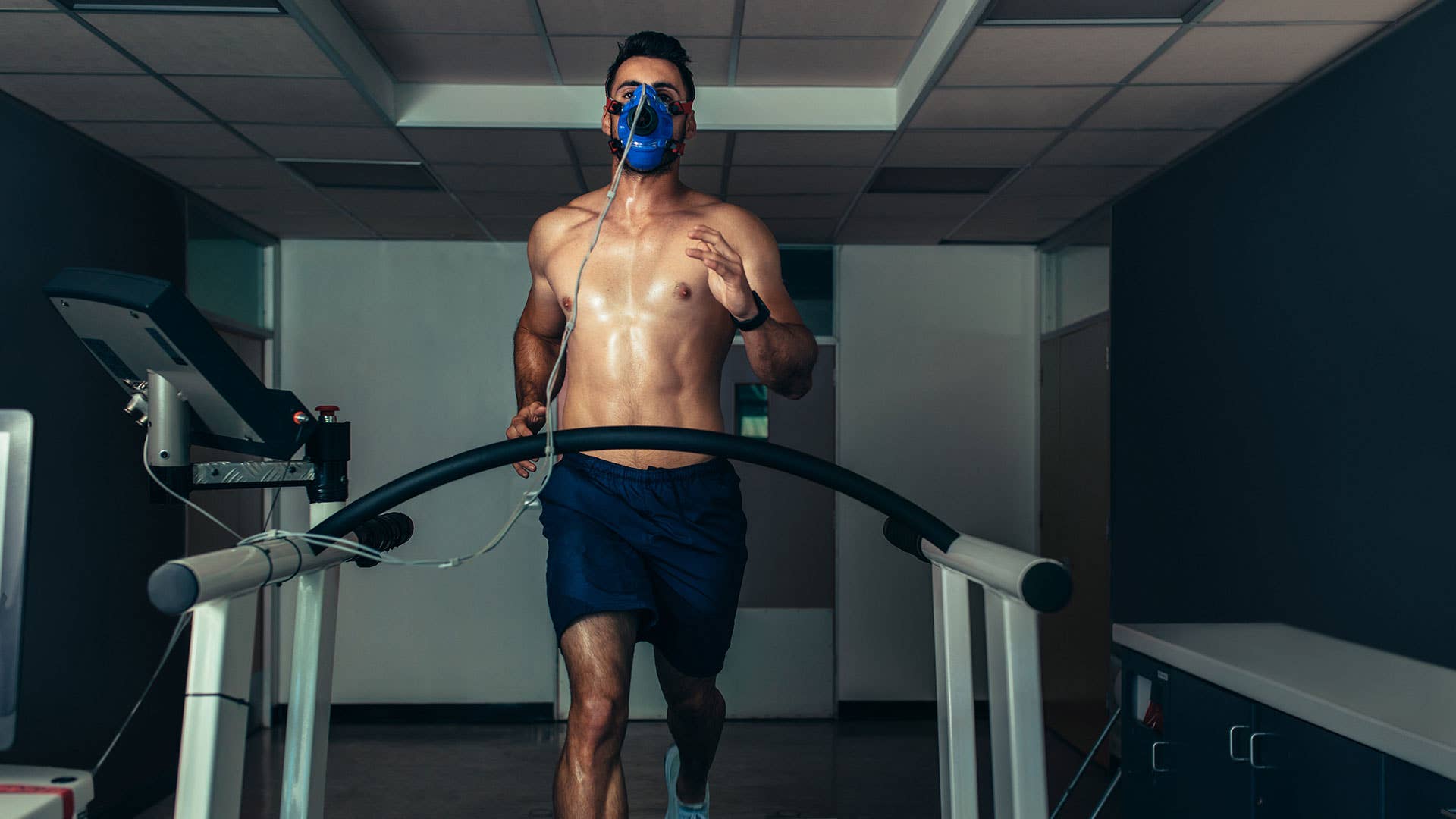
Now, historically, your VO2 max is set by a treadmill check the place you’re hooked as much as a ventilator, run at totally different paces, and a machine measures how a lot oxygen you eat with every breath, then how a lot of that oxygen your physique makes use of to gasoline your train.
Related: 3 Tips for Maxing Out a HIIT Workout
However a latest examine reviews this coveted stat could also be proper at your fingertips: The Fitbit Charge 2 is ready to measure your VO2 max on common inside 10 p.c of the accuracy of a full-blown treadmill check, says analysis in Medicine & Science in Sports & Exercise.
Nonetheless, the fact is, bragging rights are nearly all that quantity delivers. As a result of whereas your VO2 max charges your potential, it’s actually the opposite numbers that come out of a treadmill check you need—particularly, at what tempo and coronary heart charge you hit each your cardio threshold (the place you burn carbs for gasoline) and your anaerobic threshold (the place you begin burning fats for gasoline).
These numbers permit you to craft a hyper-personalized coaching plan for just about no matter aim you might have—bettering biking endurance, mobilizing fats shops, however principally, turning into the fittest and best athlete you’re able to being.
The Downside With Not Understanding Your Numbers
Most gymgoers practice within the “useless zone” of their coronary heart charge—the house above their cardio threshold however under their anaerobic threshold, Pippin says. Numerous match of us find yourself right here as a result of it’s reasonably troublesome, you get an ideal sweat, and really feel such as you completed one thing. However it’s type of like going into the load room and benching the identical weight week after week—you continue to really feel a “pump,” however you’re not likely bettering something, he says.
What’s extra, it really creates new issues: “Coaching within the useless zone will make your cardio threshold actually low (round 100 bpm) and your anaerobic threshold moderately excessive (like 155–170 bpm),” Pippin says. “Even in the event you really feel such as you’re working onerous, getting an ideal sweat, you’re basically spinning your wheels in terms of progress.”
Related: How to Fix Your Bench Press, According to an Expert
Craft a Coaching Plan Primarily based Off Your VO2 Max Check
Head to a efficiency heart or bodily remedy workplace to get the treadmill check accomplished. It’s going to solely set you again $100 to $250, however with out the customized numbers, you’re basically operating blind and easily guessing, Pippin says.
While you get a VO2 max check accomplished, take a look at your cardio and anaerobic threshold. If there’s greater than 30 bpm between the 2 numbers, your first aim is to shut that:
For six to eight weeks, your coaching routine needs to be targeted on sluggish cardiovascular exercise at just under your cardio threshold, Pippin says. Prepare at this coronary heart charge for 60 minutes, 4 to 6 instances every week. Moreover, at some point every week, crank your coronary heart charge as much as your anaerobic threshold for a HIIT routine or spin class for 30 to 45 minutes.
After six to eight weeks of the above, or in case your numbers are already inside 30 bpm of each other, you’re prepared to start out constructing an even bigger engine with VO2 max–specific training.
Warning: The under is extremely uncomfortable. However after 4 to 6 weeks, Pippin reassures, you will be extra able to crushing each lengthy runs and brutal WODs. Stick with it for 8 to 12 weeks and you need to have a ten p.c greater VO2 max stat to brag about.
Related: 9 Workouts Trainers Do When They Only Have 15 Minutes to Sweat
The VO2 Max Coaching Plan
Instructions: Full 60 minutes of sluggish endurance work at your cardio threshold 3 to 4 instances every week. Then, 1 to 2 instances every week, do one of many following:
Exercise 1:
Carry out 3 rounds 20–40 seconds of maximal depth effort, adopted by 1–3 minutes of relaxation (or when your coronary heart charge falls between 110 and 130 bpm). That’s 1 set. For the primary two weeks, stick with 1 set, then progress to 2 units with 8–10 minutes of relaxation between the 2. Do that on an assault bike, versa climber, or on a observe (sprints).
Exercise 2:
Carry out 3 rounds of 90–120 seconds of maximal depth effort, adopted by 1–2 minutes of relaxation. That’s 1 set. For the primary two weeks, stick with 1 set, then progress to 2 units with 4–6 minutes of relaxation between the 2. Do that on an assault bike, versa climber, or on a observe (sprints).
Exercise 3:
Carry out 5–6 rounds of seven–10 seconds of maximal depth effort, adopted by 2–5 minutes of relaxation (or when your coronary heart charge hits under 120 bpm). That’s 1 set. For the primary two weeks, stick with 1 set, then progress to 2 units with 8–12 minutes of relaxation between the 2. Do that on an assault bike, versa climber, or through explosive pushups or bounce squats.
Exercise 4:
Carry out 10–12 rounds of 10–15 seconds of maximal depth effort, adopted by 20–60 seconds of relaxation. (Every 10–12 spherical equals 1 set.) For the primary two weeks, stick with 1 set, then progress to 2 units with 8–10 minutes of relaxation between the 2. Do that on an assault bike, versa climber, or through explosive pushups or bounce squats.


Discussion about this post